Asian Invasion from The Southern Documentary Project on Vimeo.
Tuesday, June 23, 2015

Friday, May 22, 2015
The Taiji Cove Sushi

Is dolphin sushi cruel? Not really. Here I'm trying to point out the irony of protesters and the same rural Americans who detest Asian Carp. Why bring up two different subjects about the industry? Well sushi was for the longest time seen as a barbaric way of eating fish. Slicing a fish up alive seems like the most rude thing to do in front of a customer, but remember that all animals are slaughtered before eaten.
The difference of course is the attachment that sushi lovers have for their fish as opposed to cow eaters who rely on processed meat with no attachment to the furry creatures that they are. Sure we can all agree that fuzzy ears are cute and lovable. But would you associated your burger to it? Would you bite into a burger thinking, wow this is a delicious cow which has been sliced and minced for my little round shaped sandwich?
Well that's the difference. People who eat sushi, sit down and admire the bright red colors of a blue fin tuna. They admire the bright orange colors of a wild salmon. And they adore the bright white flesh of a tai snapper. They know what they are eating because it's a cherished art to eat fresh fish.
In Japan, Taiji Cove offers dolphin meat. For the longest time, you'd think that this was just a niche market. I mean even people in Tokyo don't eat dolphin. It's not sustainable to eat dolphin on a daily basis for an entire population of Japan. In fact, Taiji is so small you can compare it to a small rural down in America. The issue really came up with the Sea Shepherd and their protesters.
Eventually the movie Taiji Cove came out which outraged Americans because they believed that slaughter wasn't bloody. Painful. Nor ugly. This detachment to their foods totally caught Americans off guard about the foods they eat.
In the same light, Asian Carp has a different aspect. First, the same sushi eaters adore Asian Carp. Not only is carp appreciated. In Lake Akan in Hokkaido, the Ainu people revere the fish. It's so clean in the lake that people find it one of the most cherished gifts of nature to the Ainu people.
In Japan, carp or koi aren't distinguished as a species. First, the carp you find in your lakes are the same carp that you would see at the koi pond. The only difference is that a fish farmer spent thousands of years breeding carp to be colorful. In Japan, on Children's Day, Koi is worshiped. The carp is a symbol of prosperity for children born and growing up.
The truth is that this species of fish and any other fish really is appreciated and adored by sushi eaters. This is the disconnect between America and Japan in terms of food. Dolphin is worshiped and even revered in Japan, but not because it's some sort of fuzzy eared creature for a zoo, or a fake mammal on TV show which saves the day in ever episode, but rather for its flavor and it's contribution to the Taiji people.
In the end, the same people that bash Asian Carp and don't consider it a food fish should also be placed in the useless category with the Taiji Cove protesters. Essentially they disrespect the foods that people eat and they lack any idea of what it means to slaughter a creature for our consumption.
These same protesters won't eat sushi and won't eat dolphin, and I'm almost sure they won't touch Asian Carp. And the yet, they will waste no time going for a hardy steak or a delicious burger. Maybe it's because they feel it's okay to slaughter cow and eat them. Yet it's not okay for Japanese to eat their sushi. Why worry about cow right? I mean it's plentiful and they are born to be killed for burgers?
Or how about pig? Let's just raise them to kill them for beacon? To compare cow to dolphin sounds weird to the naive. However, you have to look at it from the sushi lover's perspective. They know what they eat. There is no detachment from the killing of their animals to the table. It's respected and almost cherished through that sharp knife of a skilled marksman. They know that only a sushi chef can kill the animal and make it fresh enough to eat raw. They know that it was a fish that sacrificed its life to become a small bite to eat by the population.
And that's why to me, disregarding Asian Carp as a cherished fish is no different than the protesters who attempt set a fake moral ground.
Saturday, May 16, 2015
The Asian Carp Forum That Fails
University of Chicago had the most comprehensive forum I've ever seen for fish. Obviously I'm on the opposite perspective when it comes to fish. I'm a sushi lover. I don't believe in saving the whales and I certainly find Taiji Cove a pride of Japanese dolphin eating heritage. Why do I mention this? Because unlike rural Americans, not to mention the Sea Shepherd and PETA, I have completely different views about worshiping fish. First I think we should adore and respect the fish we eat. We should do the same with cows and pigs.
I mean if it wasn't for their death, we wouldn't be able to enjoy the dirty pink-slime burgers, meat-glue steaks and of course my beloved sushi right? Obviously the problem with America is that they are completely detached from their meats. So protesters and majority of Americans simply see anything that they find foreign in the culinary world as distasteful or simply out of line.
Asian Carp is the opposite. Here's a situation where somebody let some fish out and it took over the water ways. Unlike the rest of Asia, carp in America is simply a pest fish, or an invasive species.
Folks, it is absolutely a food fish. In fact, the more notorious common carp is a food fish.
In a time when we have all this fish, instead of appreciating them as another source of food, people are killing them off, using them as waste, or simply poisoning them in the waters. Why? Because they want to avoid the invasion of the Great Lakes. And this is fine right? If you watch this forum, you'll see just how invasive the fish are. But the real problem is that none of them have developed the right solution. Making them for what they are, food fish.
People think that carp is not valued and not worth eating in America. It's been like this for some time in rural America. However, if we all changed our views about food, this would never be the case. I look at the other bottom feeder in America as an example. During the Great Depression, people were literally starving. Soup lines were the only option for a majority of Americans. But in the South, some rural Americans decided that catfish was a source of food. Due to traditions from France, much of the catfish in the South was developed into a culinary cuisine for the region.
Today, not only is catfish an accepted part of food culture, it is a staple in the South as farmers grow catfish for restaurants across America.
Now how did this happen in our history? It turns out that people appreciated that the fish existed. And people worshiped catfish as a way to simply eat. Carp is not that far different. In Japan, people worship what they eat. Blowfish, blue fin tuna, whale, dolphin, eel, and yes even carp are all worshiped as food fish in Japan. And it may sound disturbing to Americans since Japanese eat the dolphins they worship, but isn't that how we should live? Shouldn't we appreciate the animals we kill as food?
Instead, everybody from scholars to biologists to politicians all see Asian Carp as just an invasive fish. Something that is unwanted, a pest, and a way to develop technology, poison, and anything else on the tax dollar.
That's what I got from the forum. Basically everybody had an aspect for attacking the Asian Carp, but none of them had a direction nor answer to basically learning to see them as food fish.
It's a food source. It has been since 2,000 years ago. You know when the Egyptian Empire existed? The Bible? Yes, it's that old folks. I don't understand why people are missing the main point of dealing with Asian Carp. See it as a food source and then appreciate them. Worship Asian Carp. Learn to adapt, adopt, and add Asian Carp as a culinary cuisine for 2015 in America.
I would label it "The Omega Movement". In honor of Omega-3.
Anyway, I'll continue to update and write my thoughts on the Asian Carp. In 30 or 40 years, we'll see how this pest fish turns out. Do the rural Americans win? Or do us International people win? We see Asian Carp as a healthy form of Omega-3 ready for the dinner table. And the rural Americans? They see no value, no appreciation, and no luck for the fish.
Yes, in the world, we see Carp as a lucky fish. Look it up.
To end this entry, I'll post the postmortem of the Asian Carp forum. And what you will see is that they still fail to see Asian Carp for what it is. It's not a debate of will America try and market the fish as food fish. It's a food fish. Will America change to admit it.
Tuesday, May 12, 2015
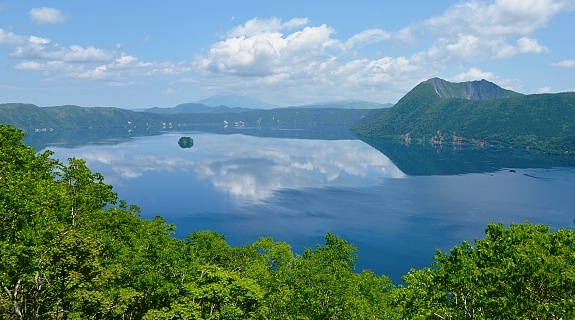
Some people just think about Tokyo when they visit Japan, but for me, the most amazing area that I have never visited is Hokkaido. In many aspects this island is forgotten because it's closer to Russia and the population is very small. However, the rich history of the Ainu live in Hokkaido and their sacred lake, Lake Akan is one of the most pristine lake systems in the world.
It's so clean that the moss known as "Marimo" shapes itself into a ball. For decades it baffled biologists on why this happens only in Akan. It turns out that the constant flow of water in the lake system keeps the water clear and the moss rolling.
But that's not why I write about Lake Akan today. I write about it because this lake also hosts some of the most revered carp. Lake Akan Carp is probably the most tastiest fish in the river systems. That's because the water is so untouched that the carp live their entire lives in clear pristine waters.
Obviously Americans will tell you that carp tastes muddy and complain that its a bad fish. However, they are referring carp in their local ponds. Imagine if you specifically eat carp based on a revered lake? So clean that it is a national treasure in Japan?

Unlike rural America, Japan has a history of cherishing its carp. And it starts from childhood. What brought my attention to carp in Lake Akan was Iron Chef Japan. When Iron Chef Chen Kenichi took a couple of live carp and made it into some of the most delicious looking fish in history.
Well it turns out that hotels in Lake Akan do the same. And they take no shame in listing carp on the menu. And why not? I have eaten carp many times and find it delicious. What rural Americans think has no weight in my book. That's because the world is just much bigger than them.
And if some of these people who refuse to eat carp saw what happens overseas. Maybe they'll show some more respect for the invasive Asian Carp in our waters in America. I'm all for reducing the population but the only way to do this is to respect the fish as food and to remember that the Great Lakes are just as pristine and beautiful in which we should appreciate good tasting sustainable fish.

Monday, May 11, 2015
Asian Carp Is Perfectly Good Fish

For years now I've been following the Asian Carp movement. And for years now I've heard nothing but hatred, jokes, and even almost coded racism towards the fish? Is there such thing as a race on fish? I guess being Asian I do take some offense that Salmon is adored in the river system and Asian Carp is not?
All joking aside, I'm just bewildered by the lack of interest in fixing the Asian Carp problem in America. It seems like everybody agrees they are pests and are flooding the gates towards the Great Lakes. Yet, nobody seems to want to stand up and do the right thing. Eat them.
Sure, I've seen the videos of the USGS and some Louisiana chefs. I've seen the carp processors and even Chicago sustainable seafood chefs promote carp. But we're lacking the basic ideas in Asian Carp. It's perfectly a good fish to eat.
How do you market carp so that rural Americans accept them? It's simple, promote them as cheap fish. So cheap that it makes sense to eat them more so than common carp. Cheaper than Buffalo or Walleye. Cheaper than farmed salmon from Canada or Chile. Cheaper than even that farmed animal meat? You know, the burger? Pink Slime?
The joke is that America is the most obese nation in the world, and nobody seems to understand that this fish will put a huge dent in the population for cheap alternatives to bad meats and a whole lot of Omega-3.
Okay, we can certainly give up on the rural American population. Why? It's simple, they aren't exposed to the international cuisine community. To this day, I still read about rural Americans joking around about sushi as poison to our bodies. I've heard all sort of jokes about eating other species of fish like Blowfish and Eel. In my book, they have to be written off because obviously they aren't open to change in fish.
What we need to do is simple, focus on the Omega-3 community. In other words, the Kale crowds will move this fish forward. Think about this for a second. When was green juicing popular anyway? I mean did you grow up drinking green drinks?
It was because of the Omega-3 crowd that kale took off in this nation. So the same crowd can do the same for the Asian Carp. Here's the reason why. First, Omega-3 is proven to help with heart conditions and diabetes. It's also proven to help with the brain functions like memory. And it's one of those things that we can't produce on our own. We have to consume them from things like fish.
The fish movement is loud and clear. I know some of you readers are thinking that I'm just echoing what most fish lovers are already doing. But let's not forget something, the entire nation of Japan is a fish diet movement. Yet, it's not exactly the same as Asian Carp. They are eating Blue fin Tuna to death. They are eating Unagi eel to death. Those species cannot be sustained for long.
What I am saying is that America has to change anyway. Unlike Japan, Americans lack the pallet that eats diverse species. Outside of the sushi crowd, Americans just consume a load of shrimp, tuna, cod, and salmon. Is that answering the questions of the Asian Carp? Not really.
The Omega-3 crowd tends to be more educated about foods than the rest of America. Not only do they count their calories and look at the nutritious values of foods, they also are keen on sustainable seafood. In other words, they eat fish that isn't on the red list at Seafood Watch (Monterey Bay Aquarium).
For me? Well I'll devour every fish I get my hands on. Salmon? Done. Cod? Oh yes. Tuna? Serve it raw! How about bass? Yes serve that too. And Asian Carp? Oh yes, fair game, and serve it on the bone please!
Unlike most of you in America, I'm not scared off by bones. In fact, I'm one of those that look at fish heads and wonder if I could get them for cheap from the grocer. You throw them in a pot and boil them to make stock. Hey remember that the entire nation of Japan has based their entire pallet on fish stock known as "dashi" or bonito stock.
There is nothing stopping us from starting a new trend. Call it what you want. Rural Americans have to the burden of dealing with this in their rivers and waters. However, it doesn't mean that the Omega-3 crowd can't enjoy them.
It's only a matter of time before America awakens to a better diet right? I mean how much longer can we consume bad animal meats before we become 90% diabetic? 90% obese? Come on America, we have perfectly good fish here.
And we are spending millions per day killing them. Let's just get a movement going...
Saturday, May 9, 2015
A Sushi Lover's Rant

I've seen enough Asian Carp videos on Youtube to make me laugh, but nothing bothered me more than this very rural American asking an Asian sushi chef if Japanese eat fresh water sushi. He goes on to ask about lake fish like Walleye which isn't even native to Japan. The chef responds that they don't use fresh water fish in their sushi bar because of the parasite concerns.
You see, in America sushi is heavily regulated. Because the demand for freshness in America is horrid compared to Japanese fish standards, the laws were provided to assure consumers protection from parasites. Having said this, Japan gets around such laws because freshness of the fish is established at the distribution level mores so than the restaurant level.
If this doesn't make sense, I'd advise you to watch a documentary on Tsukiji Fish Market on NHK. They go into details about flash freezing technology, the buyer's intent to buy the freshest fishes, and the sellers intent to only get fresh fish from the fisherman.
This relationship is what is revered by chefs around the globe. Sushi looks simple enough, but each sushi is designed and conjured specifically for the species of fish. The one bite you take is designed and engineered 2,000 years ago from chefs during the Samurai.
Having said this, people mistake sushi for just simply fish and rice. Nothing special. Each fish is prepared differently and served at different temperatures to assure freshness and taste.
That's why a real good sushi house won't offer soy sauce. That's because the chef's will brush a lighter soy sauce or a stronger soy sauce they have created for you before they serve you. That glossy texture over the sushi is their soy sauce brushed.
I can go into detail about sushi all day, but it's probably better if you watch "Jiro Dreams of Sushi" or even the small New York Times piece on "Sushi Nakazawa". Both chefs Jiro Ono and Daisuke Nakazawa are heavily featured in the documentary talking about the need to appreciate Japanese traditions in sushi.
And so here's my rant. Why is it that the rural American bother to post a very disturbing video mocking and asking a sushi chef if they would eat or serve fresh water sushi? Obviously this is because the guy is used to Walleye and the Asian Carp being fishes he sees in his river or lake.
Sure, those are very popular and common fishes in rural America, but does he miss the point? In Japan, fresh water fish is revered and eaten just as much as ocean fish are eaten? Japanese do not separate what is edible by fresh water species verses ocean water species. Anything is edible if the sushi chef feel it is fresh enough and delicious enough.
That's what sushi is. It's an appreciation for the arts. It's an appreciation for fish. Unlike this rural guy who obviously doesn't get the history of sushi, Japanese people worship and revere fish they consume.
So yes, we eat fresh water sushi. We have to. It's our heritage and respect to do so. Fishes like Kohada also known as lake gizzard shad is a precious fish from the fresh water lakes. Think about it, it's been around since the Edo Period. Are you telling me that we should question if fresh water fish is edible as sushi? It's been around longer than George Washington himself.
For me, we just fail at adopting more appreciation for the food we eat. Whether if it is cow, pig, deer, or anything else, we disassociate ourselves with it out of convenience. The gross factor really allows us to appreciate our food.
Yet, when it comes to fish, we know what a fish looks like right? Yet, why is it that we can't get our heads around eating them regardless of species? Why is it that some how Asian Carp is seen as inedible by rural America? Why is it that this rural American guy wants to question the integrity of fresh water sushi?
It exists. It always has. It's just prepared differently. And trust me, sushi chefs in Japan have always found ways to bring it to the table so that it is safe and tasty. They are perfectionists in the art. The idea that fresh water fish is too dangerous to eat is a fallacy.
Just look at one of the most revered fishes to eat in the sushi kingdom, fugu? Fugu is blowfish and that is extremely poisonous. Yet, you want to sit there and tell me that's acceptable while fresh water fish isn't?
The only fish you should avoid to eat is Escolar. In America they serve it as "white tuna". Nothing can be further from the truth. White Tuna or Escolar is not permitted in Japan. The fish gives you sickness in your stomach and every time you will go home a bit sick.
America is the only nation that offers Escolar on the menu. If you want to question the integrity of sushi, you shouldn't question Japanese sushi chefs. You should question the politicians that regulate food. It's a failure.
Tuesday, May 5, 2015
Can Jiro Ono of Dreams of Sushi Change the Image of Asian Carp?

Recently I read up on the history of sushi. It looks like Asian Carp DNR and Great Lakes folks aren't the only ones who have forums. It turns out that some of the highest ranking sushi chefs in Japan have also been invited to variety of forums to figure a way out for sustainable seafood. Jiro Ono is the star of the documentary "Jiro Dreams of Sushi". He is also the first to say that his employees won't be serving the same pristine fish in the future due to depletion.
You see, in secret, Jiro is saying what people like the Sea Shepherd have been attacking sushi chefs for. And that's sushi is causing huge extinction of some of the most important fish in the ocean. I've said this in the past that the real reasons for the problem isn't Japan but rather that sushi is now a global food. Is there enough fish to sustain some 7 billion people in the globe? Probably not.
However, books have been published for decades talking about the ancient history of sushi. We all know that sushi is Japanese, but it also originated from China. During the Tang Dynasty in China, sushi evolved in Japan simultaneously. Japan was a vegetarian state due to the national Buddhist religion. After the realization that the Mongolian Empire and even the United States had better weapons and bigger soldiers, Japan turned to meat and fish.

How does this tie in with Asian Carp? It's simple, after researching sushi, I began to realize the entire ancient history of sushi revolves around carp. Two books that were listed on Amazon showcases carp on the cover pages.


In fine fashion I just put invasive species and sustainable seafood in one category. Why? Because we all know that the Carp Czar and the DNR want Asian Carp gone or reduced. And we all know that sushi is causing a downturn in population of every fish from Blue Fin Tuna to Unagi eel. Those two species are on brink of becoming extinct commercially.
However, in general, we had the same issues with dozens of species. Chilean Seabass and even Cod were on the brink of extinction due to over fishing. The list goes on and on. Yet, we refuse to realize that the pallet is the only way to move ahead with Asian Carp. As well as any other invasive species.
So what are things that need to be done? It's simple, Jiro Ono and maybe Iron Chef Morimoto, Chef Ming Tsai, Chef Nobu and Masa all need to be given a chance to create a dish out of Asian Carp. Not only do they need to do this, they also need to have an endless supply of the fish alive. This way, they can do whatever they want to proceed with a creation of a sushi for the American market.
What really matters is that the top chefs start to use and serve the fish in their pristine sushi houses. Jiro may not be a choice since he lives in Tokyo, but the fact that he is already well known and is a national treasure makes it hard to ridicule nor question his use of carp.
Carp is the roots of Japanese sushi. And it is still a main fish in China. Those two things tell me that there is much room for growth for Asian Carp in the sushi kingdom.
I've yet to see carp served on a plate in my area. However I do see carp every weekend at my local ethnic grocer. They are almost always farmed carp and they are happily swimming in fish tanks clueless that they'll be eaten some day for dinner!
Knowing Jiro Ono's traditions for Edo-mae sushi, it's not a far stretch to go even farther back than the Edo period to create something with carp. Carp is the origins of sushi and Jiro could make this work.
In the past I posted some articles on Chinese cuisine using Asian Carp, but there is a huge arena for Japanese cuisine as well. Imagine an entire documentary on Asian Carp through the lens and scope of Jiro Ono? The best sushi chef in the world?
The key here is using Jiro to bring back a tradition in Japan that never existed in the United States. Carp sushi may sound strange but it wasn't long ago that sushi raw fish was strange in America...


Saturday, May 2, 2015
Are Scholars and Politicians Enough to Stop Asian Carp?

Growing up, I remember the beautiful display of carp flags. It's Children's Day in Japan and they celebrate the beauty of carp. In fact, Koi means "love" in Japanese. And the Emperor himself named the carp "koi" as a symbol of Japanese children.
So to this day 2,000 years later, Children's Day is celebrated with carp. This brings up a good question. Obviously we don't have an Emperor in the United States to follow and when it comes to Asian Carp, there's really no authority to lead on how we can approach carp.
However after watching and listening to the Asian Carp Forum, both in 2010 and in 2105, I'm still not convinced that these scholars, biologists, and politicians have what it takes to make the change. In my eyes, the true problem with carp is that they are "hated". The fact is that rural Americans just see carp as a useless unwanted garbage fish. Without any value, carp is neglected as a pest rather than a fish.
And maybe that's where the disconnect is. Carp is cherished in Japan. It's a symbol of children. There is big business around carp in the sense that it's a cultural icon. In America, we worship things like the Bald Eagle and maybe the dolphin, but rarely do we worship things that we want removed. This is a key difference between Americans and the rest of the globe.
In Japan, they worship fish like blowfish, dolphin, whales, and even blue fin tuna as sacred things to eat. In other words, you'll see signs and statues of these fishes even though their goal is removing them from the oceans and cutting them up to eat raw. It sounds harsh and the crazy Sea Shepherd won't accept this mentality. However, this is the biggest mistake in American society.
We hate Asian Carp in America. We bash them. We kill them. We hit them with bats. We do everything to Asian Carp almost like a racial hatred lynching. The reason is because in our society in America, anything we are to kill off, we are supposed to hate with almost a sick passion.
It's embedded throughout history of race, not to mention the grotesque facination for violence in Hollywood, but rarely do appreciate a kill as food. We don't cherish the kill of a species and worship it.
Scholars are great at dissecting the carp anatomy for finding a smoking gun to stop carp. Historians are quick to point out that carp was introduced decades ago and won't become a food staple in America. And the politicians are just simply attempting to find military and engineering ways to stop carp.
None of them seem to understand the missing element of accepting carp as a cultural icon. We need to worship carp and appreciate them for being a food fish.
Until we change this and see carp as a cherished fish and a blessing to eat, we won't be able to market carp for a what it is. It's simply a good eating fish. And they multiply quickly which makes them a viable food source for the poor, not to mention the obese who need more Omega-3.
It's easy in Japan because the Emperor is sacred. What he believed, Japan always listened. In America, we only have a Carp Czar. And his sole job is to remove carp and kill them off permanently. In fact, John Goss clearly stated he had no interest in marketing carp as a food fish.
If our Czar can't help market the fish. Who will? Well 30 years ago, I sat in America thinking to myself how come sushi or raw fish is so hard to find. Everybody around me simply felt sick at the idea of eating raw fish. This eventually changed over time because children grew up around sushi. It was easily more accepted because they didn't have the upbringing of fear that the previous generation had.
In fact, sushi became a huge hit more recently due to the obesity epidemic. More and more Americans are getting sick with heart disease and diabetes at younger ages due to bad diets. Sushi became the only viable option. The problem? It's just not sustainable for the entire globe. There isn't enough fish to support the sushi craze across America.
If these scholars and politicians had worked together on this fact, they'd immediately move to cherish the carp as a food fish and not to mention integrate a cultural way to accept this fish. Remember, cherishing this fish doesn't mean preserving them and protecting them as a species, but rather appreciating them as a viable food source. To kill them off and to eat them knowing that they provide the highly valued Omega-3 for the obese population.
The benefits are indisputable. It'll help fight heart disease, diabetes, and cancer. The three leading diseases in America. Also, I truly believe that the carp population will begin to shrink. Also, the rural American voices and stereotypes towards carp as a food fish will cease. In fact, I know it will because sushi is now an American icon. American sushi is seen with respect even in Japanese society. The tables have turned indeed.
As for Asian Carp? We need a new approach on this beautiful food fish.
Friday, May 1, 2015
Asian Carp Forum Missing One Element

I don't know about you but I enjoy spending my time listening to speeches and lectures. Sometimes I'll listen to book authors on California's Commonwealth Club and sometimes I'll just listen to C-SPAN. Trust me, this is the kind of thing most people would never do because listening to radio means music or even political talk radio.
However, recently I was interested in the Asian Carp forum at Chicago University online. They put together a panel of professionals from all fields to talk about invasive species and the dreaded Asian Carp. Now this might sound really boring, but for a guy like me, it's just amazing to see history unfold. How does America allow this to happen and to have billions of carp infest the waterways?
Is there something wrong with rednecks in Chicago? Or is this simply a case of the river system? It turns out that a lot of this has to do with rural Americans who aren't used to internationalism. In other words, we'd never have a problem like this in California. Why? Well those who purchase carp and/or eat carp take care of them as food fish.
Carp sells for $4.99/lbs in California. For this reason, no sane farmer nor transport services would allow for any carp to escape aboard a truck. Also, carp is a fresh water fish that tastes pretty much like the water ways that it lives in. So dirty ecosystems and ponds wouldn't be a good place to throw carp into if they want to make money on them.
What rural Americans in the Mississippi River system miss is this fact. That, the more cherished the fish is, the less chance that it'll escape and do exactly what took place in their region.
The forum was interesting. They consisted of a bunch of professors I've never heard of. Some of them were government employees. And of course the media jumped all over this a few years ago because the fish jumped out of the water like Tobi or flying fish. To me, it was a chance to see America in action as opposed to seeing Japanese in action.
You see, Japanese have a relationship with carp that goes back 2,000 years. I saw two segments on carp. The first was 5 years ago talking about the invasive Asian Carp. And then this year regarding a new book by the same think tank on how to fight invasive species.
What bothered me was the fact that none of these professionals seemed to understand the nature of how carp is cherished. Now I'm no fisherman nor a fish fan, but I do know many people who adore carp. Not this type but the kinda that costs $10,000 and has colors on them. They keep them in ponds with beautiful decor. Some resemble Japanese Tea Gardens.
Having said this, how could America be so divided? One group that adores this fish and another that actually cracks jokes and attacks them? Are these two Americas just not seeing eye to eye? I'm not really sure myself, but I do know that America adores and respects the King Salmon. And that's another fish that swims in the waterways. The only difference between Salmon and Carp is that Americans don't eat the carp.
What if? Well what if we could better educate the American public? It's not a stretch because so many fish lovers already adore the Japanese Koi and pay more than ever for these fish. As for the Asian Carp? America could see them as food fish if we start the population early at a younger age.
To do this, Chicago University must have another forum. One that includes chefs. I'm not talking the ones from Food Network or something, but rather ones from Japan and China. Let's bring in the people who are used to cooking carp and show some exposure to the culinary history of carp.
I can think of dozens of examples of fish that America found useless which has become a cherished food in today's world. Blue Fin Tuna was once a garbage fish in America because the dark red meat wasn't used in canned tuna. Only after Japan introduced transport did it become a sushi boom.
Another example is herring eggs. Although herring is a staple in Norway, the eggs don't sell well. However Japanese eat herring eggs during a holiday season. It's a national treasure and the secondary egg market for herring has now surpassed herring as a money maker for processors in Norway.
There is definitely a market for Asian Carp in America. It's just a matter of educating the politicians to remove the Lacey Act and allowing Californians to enjoy fresh carp alive. Also this assures that the sushi chefs get a hold of the freshest fish. Alive is always desired more in sushi as well as Chinese cooking as opposed to traditional American cooking which requires them processed and frozen.
This subject was never discussed in the forum. But rather mentioned marketing of Asian Carp as a failure. Of course it is a failure if we rely on Americans to invent the market. The market has to come from the Asians in America.
Sunday, April 26, 2015
Carp in a Wok
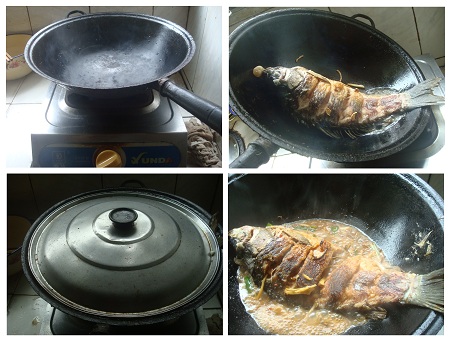
For years now I've been wondering why America is just ignoring 2,000 years of Chinese recipes with carp. I've found dozens of innovative recipes from carp taco to carp hot dogs, but nothing beats a traditional whole fish recipe. In fact, why try to debone carp when we all know that the y-bones are infamously hard to get around?
Outside of sushi, most fish are served with bones in both Japan and China. It's customary to simply eat around the bones because it helps you learn chopsticks. Okay maybe that's the problem with America. We just don't know how to use chopsticks.
That's changing a lot these days due to the influx of sushi and the influx of culinary shows. If you ask me, we should return to whole fish dinners in America. It wasn't long ago when fisherman and beach goers would take a whole fish and cook it over a camp fire. And they pick the bones to eat the freshest fish.
Sure, it's a stretch to incorporate this with carp in America because we rarely eat things like salmon or cod whole anymore. If we could simply offer more fish whole in the grocery stores, I'm sure more people would venture into cooking it whole
Online, I was able to finally find some traditional carp recipes. Guess what? You don't have to worry about bones because everybody will expect them to have it in this method.
Just take the cleaned carp and fry in a wok. You see, the wok was designed for this. You don't need a lot of oil because unlike your deep fried fish sticks, this is more about slowly pan frying the fish to get the inside done with a crispy skin on the outside.
Chinese have perfect this style cooking for over 2,000 years and we are basically trying to reinvent the wheel in America. Eat carp yes, but eat it whole. That's the way it was intended to be eaten. We lack two categories for fish in America. The processed fish stick stuff and bone fish. Bone fish meaning it's sold fresh whole.
The funny part is that the constant joking about carp being garbage fish has made me shake my head about just how far removed rural America is to the world. Carp, when cooked in a wok just comes out delicious. And carp in a wok, although sounds difficult, is actually the easiest way to cook fish.
The thing about this is that you can do with with the most expensive fish like red snapper and even wild salmon, but you can also do it with cheap fish like tilapia, bass, and even carp.

Saturday, April 25, 2015
Seafood Watch Lists Carp As Food Fish


Online, there has been infinite jokes and questions about Asian Carp. The most common question is carp being edible? The reality is that most Americans lack fish in their diets to justify avoiding carp as a choice. However, for the longest time Monterey Bay Aquarium didn't have carp listed as a food fish. It wasn't until I asked them directly and also wrote to them the they replied back that they would indeed add carp and that the biologists were fact finding on information regarding nutrition and ratings for the carp as a food fish.
Today it's officially listed as a food fish on Seafood Watch. America's most respected listing of seafood ratings in the world and also a great way to join the sustainable seafood movement. In fact, restaurants are encouraged to get on board to be certified by Seafood Watch to become sustainable.
Seafood Watch recommends "Certified Natureland" farmed carp. This means that they went to the farm and tested the waters, the atmosphere and nutrition of the carp. Natureland must have passed all their requirements to be a supplier of carp.
Now for those in rural America who question the validity of carp as food, well it's very difficult to rebuke Monterey Bay Aquarium. They are truly the benchmark in seafood ratings and sustainable fish.
What does this mean for the infamous invasive Asian Carp? Well it's simple, for a long as the Lacey Act exists, farmed carp will be the only best option in California. That's because to this day, we still don't have access to the wild Asian Carp from the Mississippi River because the Lacey Act won't allow for shipment of live Asian Carp.
Live carp is still very common in ethnic grocers across California but almost all of them are farmed. It's a weird reality that consumed fish that is considered invasive species in America has to be farmed in America. Does this make sense? We have billions of carp in our water ways and none of them make it to the grocers. Instead markets are forced to use farmed carp because that's the only way to get them in tanks in California?
It doesn't matter. In my eyes, farmers are farmers and they deserve to be a part of the process when it comes to fish. I'm just glad that the prestigious Monterey Bay Aquarium finally sees carp as one of the most eaten fishes in the world.
As the Great Lakes suffer to fend off Asian Carp, here we are in California with access only to the farmed carp. Farming fish is one way to remain sustainable, but not when we have plenty of invasive fish to go around?

Thursday, April 23, 2015
Reducing Invasive Fish

I've thought about Asian Carp for some time. I know that the DNR, the White House have spent millions of dollars preventing this invasive fish from entering the Great Lakes. However, there is a very important element to this story that is missing. The fact that Asian Carp is a food fish and Americans don't want to accept it as a viable food source.
Today, I just wanted to talk a little bit about changing the dynamics of the entire population in America. For years, both parties in government have been arguing about the costs associated with healthcare for the poor and the sick. It's as if they don't want to pay for it with our tax money, yet the food companies continue to rack in profits feeding our young worse and worse products with additives and processed chemicals. In other words, obesity is an epidemic in this nation and nobody seems to have a nationwide solution to stop it.
What if Asian Carp could be the push we needed to emphasize Omega-3 back into our children's diets?
Asian Carp poses a huge threat to the Great Lakes, but it's also very healthy. You see, carp is a food fish. Asian Carp is regularly eaten in China and Eastern Europe. If this fish has been around for 2,000 years in the culinary world, there's no debate about the nutrition nor the recipes. It's just a fact that people eat this fish.
In America, the problem is perception. People don't like carp because they compare it to the common carp which are bottom feeders and seen as garbage fish. However, even garbage fish are eaten daily in America. If you look at lobsters, catfish, and even flounder, all of them eat dead things in the ground. We may not agree to see it that way, but I'm sure the biologists don't distinguish between which is a good or bad bottom feeder, regardless of cuisine, taste, nor traditions.
For me, perhaps the biggest market is sushi. I don't understand why in America we are so limited to ocean fish for sushi. In Japan, it's obvious that all fish are fair game for consumption. Sushi chefs across Japan have found creative and innovative ways to consume fresh water fish as sushi. Perhaps the most famous is Kohada which was showcased on "Jiro Dreams of Sushi". The gizzard shad from the lakes are carefully prepared in vinegar to be served as nigiri based on Edo-mae sushi. It's the traditional Tokyo style sushi which shows off the pristine silver colors of the shad.

However, carp is no stranger to sushi. Chinese have eaten fresh water sashimi for centuries. It lost its luster after the fall of the Tang Dynasty but it continued to thrive in Japan. The Emperor loved sushi so much that it became a national dish. Carp was the first derivative of sashimi. In the mountain regions of Japan, sushi chefs grab carp and cut it down alive into slices and serve it directly in its own carcass. It may sound cruel but Japanese are notorious for freshness and having the fish served in its own body is seen as so fresh that the fish may even move.
Now nobody expects Americans to accept traditions of sushi. We are a nation that implements moral rights to fish. So perhaps the only thing we can do is push Asian Carp to be as delicious and cherished as our king salmon which can easily use the same rivers.
After reviewing and reading forum after forum on Asian Carp, I'm finding that the name isn't really the biggest hurdle for carp. It's the bones. Americans, or at least rural Americans find that the fish is too bony to make it viable as a food fish.
I don't know about you, but isn't that why we have sushi? The sushi masters are so well prepared to get around bones that they see fish like this as a challenge. They'll slice and clean the fish with their expensive sharp knives showcasing their talents in front of their fans and patrons. In fact, most sushi eaters prefer to try the most exotic fishes because the idea of sushi isn't just freshness but also trying a variety of species.
The biggest hurdle for carp isn't just promoting it to Americans, it's also the laws. Most carp are usually sold alive in other parts of the world. Unlike other fishes, carp tends to degrade quickly after death. So for this reason, chefs have discovered ways to just keep them alive in tanks and prepare them for consumption as customers order them.
The Lacey Act implemented by Congress prevents any carp to be transported alive. This means that restaurants and even fish markets can't purchase Asian Carp alive. Chinese, especially the Cantonese cuisine is customary to store fish alive before preparing. You will see live crab, lobster, and even bass alive in tanks at Chinese restaurants. It's their tradition.
In sushi restaurants, almost all fish are processed and frozen. That's because laws in America have forced a term "sushi grade" which almost always forces all restaurants to serve fish frozen to kill off parasites. And although chefs will say that their fish are fresh, it's almost certain that all their fish have been frozen overnight or flash frozen to kill off parasites by law.
That may be an issue for the Asian Carp. Although the fish is normally transported killed. It almost always is driven for hours before they are frozen and processed at the factories. That's because none of the Asian Carp are caught with sushi in mind.
Removing the Lacey Act will allow for more sales of carp. It will not only open the flood gates of the Chinese restaurant market, it'll open new innovative ways for fisherman to transport fish alive to processors who can then prep the fish for sushi consumption. Probably flash frozen -40 below zero and then shipped to chefs across America. Essentially opening another source of fish similar to that of Tsukiji Fish Market which happens to be 8,000 miles away.
In rural American forums, I'm learning that ridicule for Asian Carp exists everywhere. In fact, most probably aren't sushi eaters. They see raw fish as the usual fears of parasites. However, us sushi lovers already know that the sushi chefs know what they are doing and almost always know more about fish than even the fisherman.
So the fear of Asian Carp as a potential parasite hazard could be removed by experts that supply fish in the industry. They are just good at what they do. And of course fresh water fish as sushi is a new concept in America but it has existed in China and Japan for over 2,000 years. It's just proven.
Perhaps the biggest example of where fears can be reduced is "Izumidai" or tilapia sashimi. I eat this regularly and chances are that many Americans have eaten this fish. That's because it's commonly served in replacement to "tai" or snapper. The white flesh is ideal sashimi and the texture between tai snapper and tilapia is very similar. Recently high end restaurants have been caught selling tilapia fillet as red snapper in America. So the potential is there.
Eating Izumidai means that fresh water fish are very viable sources for sushi. It has been and always will be.
To reduce invasive fish, it's possible that sushi chefs should come to the rescue. Eating Asian Carp is the only way that we can move ahead with the fish. All other options are just simply too harmful to the environment and the economy. Sushi is an expansion, a way to educate and increase Omega-3 back into the American population, and of course a cleaner way to remove carp.

Subscribe to:
Posts (Atom)